
Advancing Engineering Innovation, Digital Transformation, and Creative Design
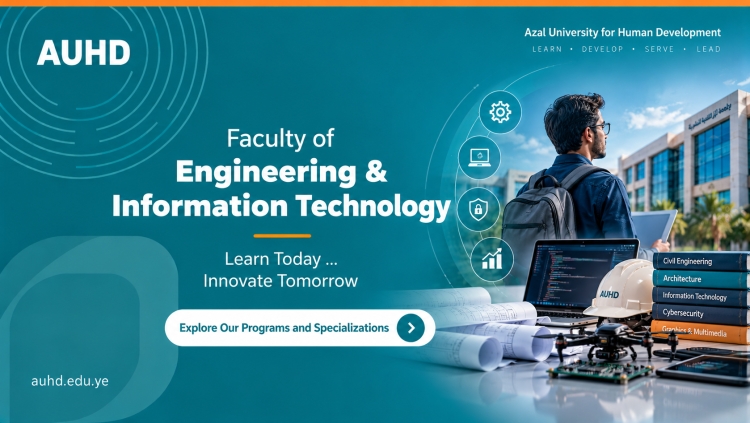
The Faculty of Engineering and Information Technology at Azal University for Human Development seeks to prepare qualified graduates in engineering, computing, cybersecurity, communications, and design. Through an academic approach that integrates scientific knowledge with technical and creative applications, the Faculty aims to respond to development priorities and the evolving needs of local and regional labor markets.
About the Faculty Explore Academic Programs Contact & InquiriesThe Faculty of Engineering and Information Technology at Azal University for Human Development provides academic pathways in engineering, technology, and design. It seeks to prepare graduates equipped with the scientific knowledge and practical competencies required to engage with rapid developments in engineering, digital transformation, and modern technology.
The Faculty's academic fields include Information Technology, Cybersecurity, Network and Communications Engineering, Architectural Engineering, Civil Engineering, Graphics and Multimedia, and Interior Design. These disciplines offer students diverse opportunities to develop technical, engineering, and creative competencies.
The Faculty emphasizes analytical thinking, problem-solving, teamwork, and innovation. It also seeks to strengthen the connection between academic learning, professional applications, and scientific research, preparing graduates to contribute to development projects, infrastructure, and the digital economy.
To achieve leadership in engineering and information technology at the local and regional levels.
To provide competitive education in engineering and information technology that equips graduates to meet the needs of local and regional labor markets through a stimulating learning environment and competent academic staff operating within a framework of academic values and comprehensive quality standards.
The Faculty lists seven academic programs in computing, cybersecurity, communications, engineering, and design. Explore each program to learn about its academic focus and practical applications.
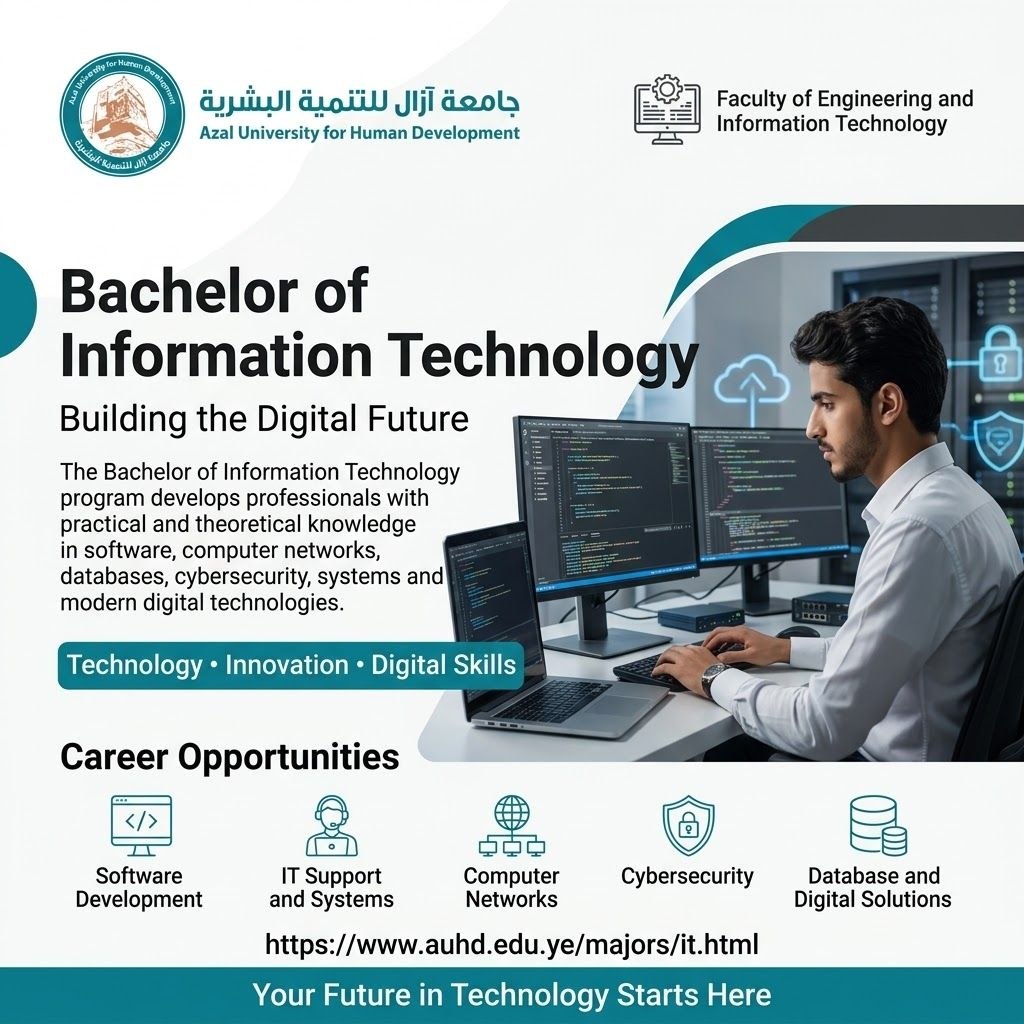
An academic program focused on developing knowledge and skills in software development, databases, computer networks, cloud computing, and IT systems management. It helps students understand information technology applications and their role in supporting organizations, services, and digital transformation.
Explore Information Technology →A specialized program covering concepts and competencies related to protecting systems, networks, and data. Areas of study include information security, cryptography, risk management, threat analysis, and authorized security testing within legal and ethical frameworks, helping students understand contemporary digital security challenges.
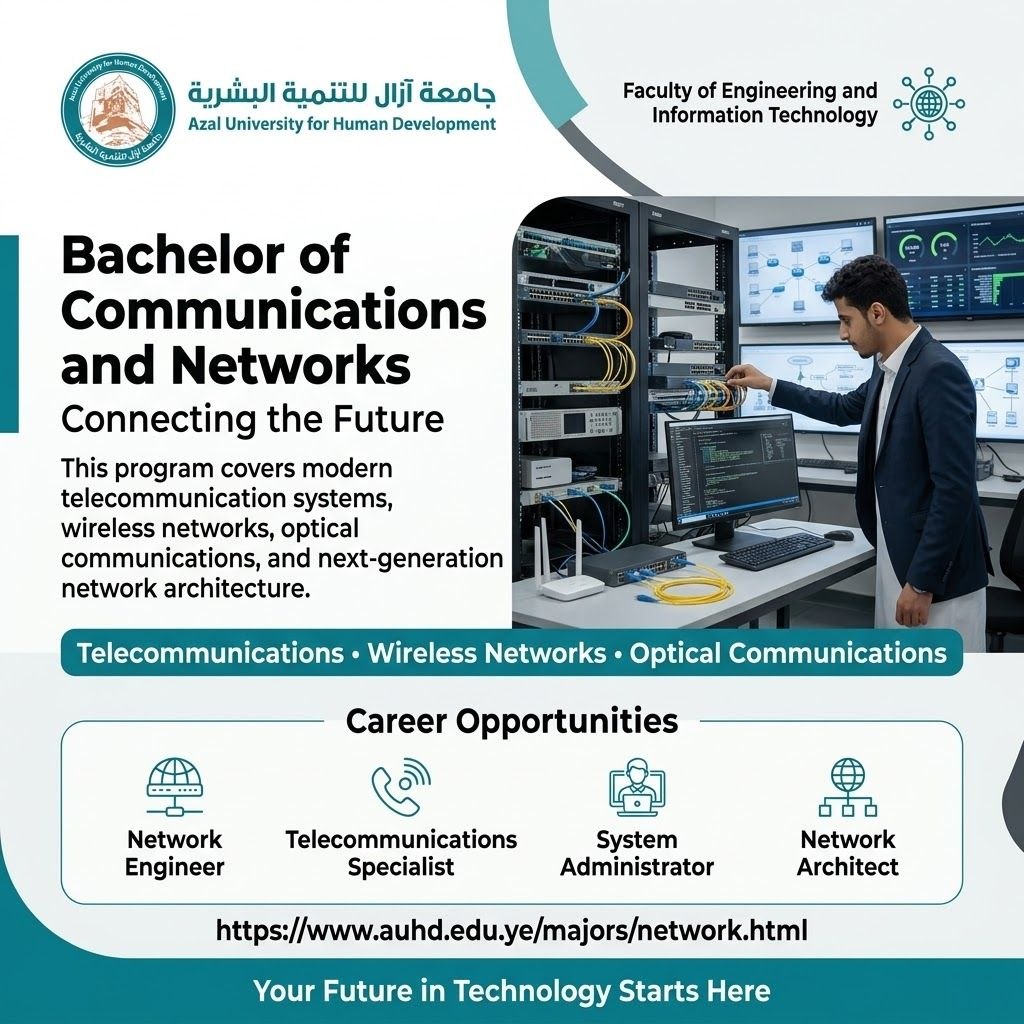
Explore Cybersecurity →The program focuses on the engineering principles of communication systems and computer networks. It introduces wired and wireless communications, optical networks, network infrastructure design, performance analysis, and modern technologies for communication and data transmission.
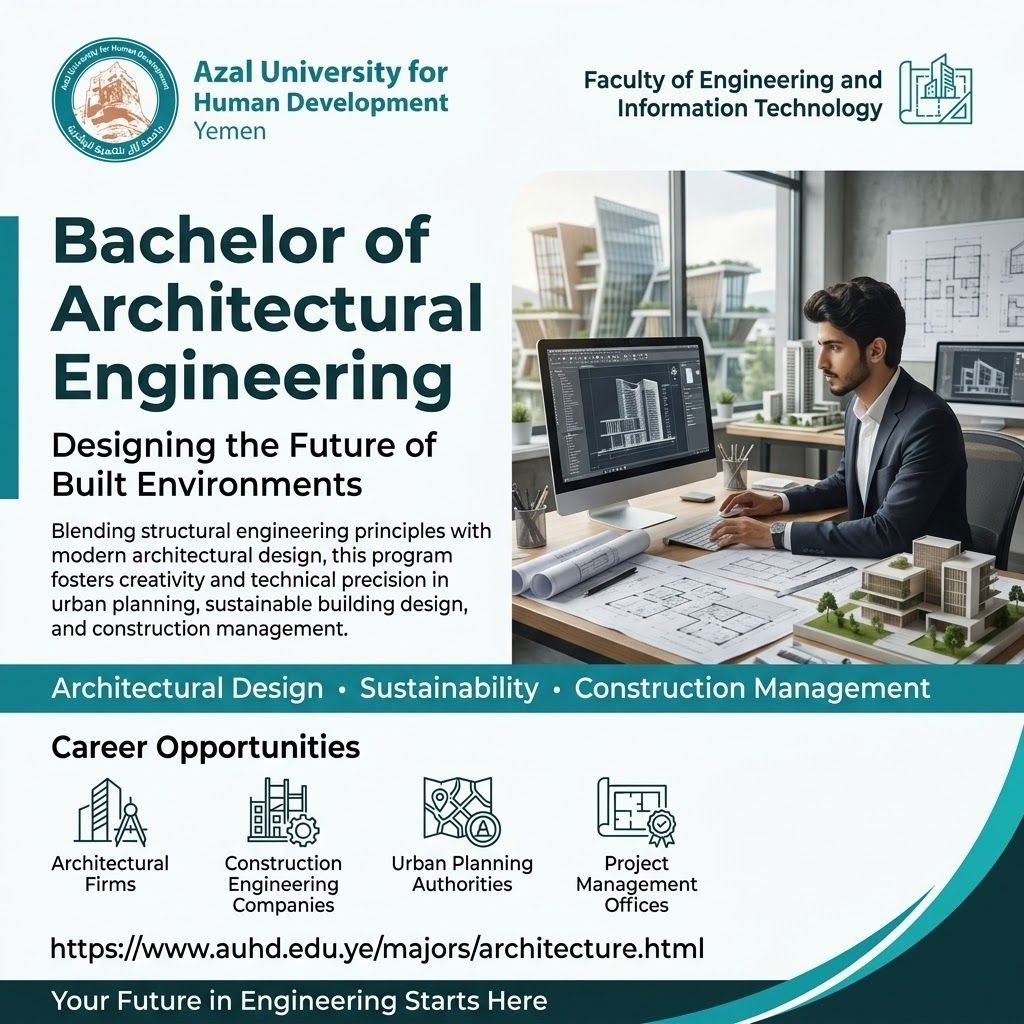
Explore Network and Communications Engineering →An academic program combining architectural design with relevant engineering and technical principles. It seeks to develop creativity and the ability to plan and design buildings and urban spaces while considering environmental, functional, and aesthetic requirements and principles of sustainable architecture.
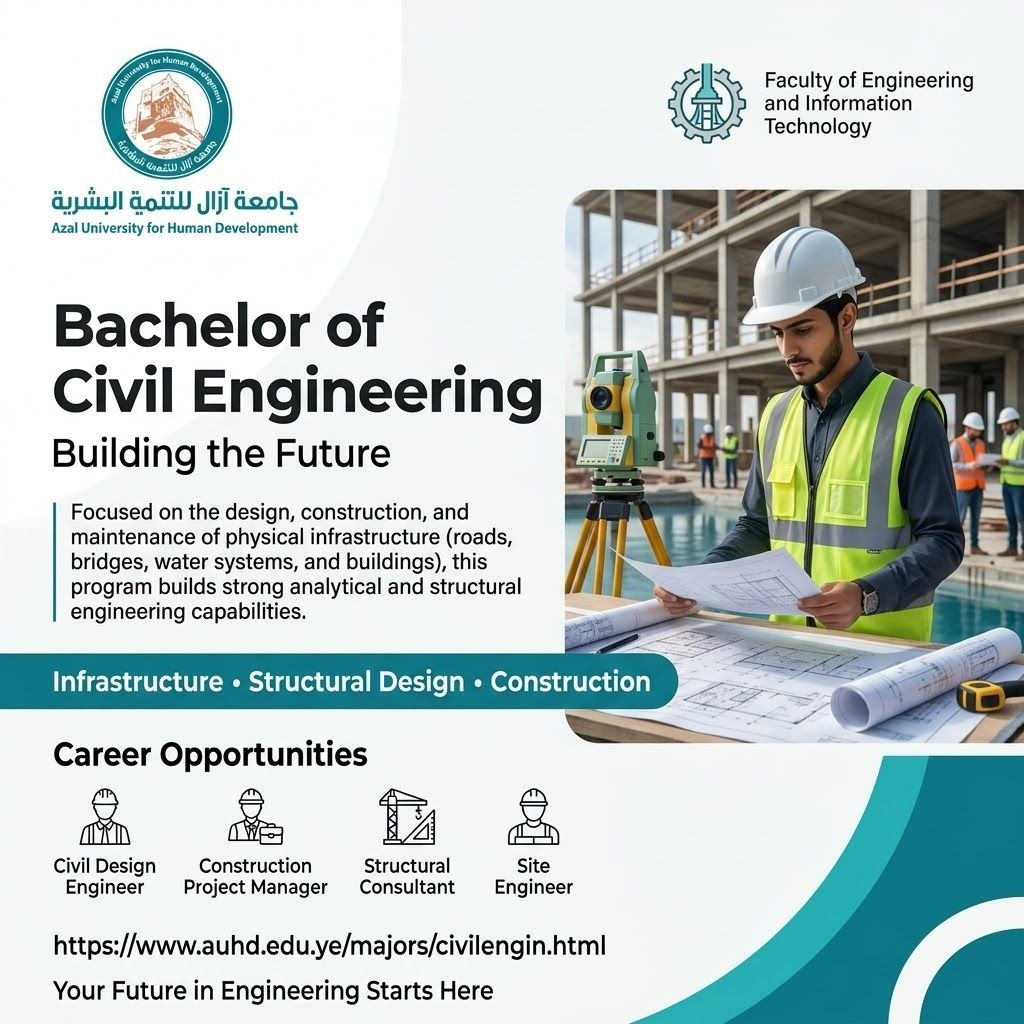
Explore Architectural Engineering →A program focusing on the scientific and practical principles of designing, analyzing, constructing, and maintaining structures and infrastructure. It introduces structural engineering, roads, bridges, water systems, construction materials, and engineering project management, with consideration for safety, efficiency, and sustainability.
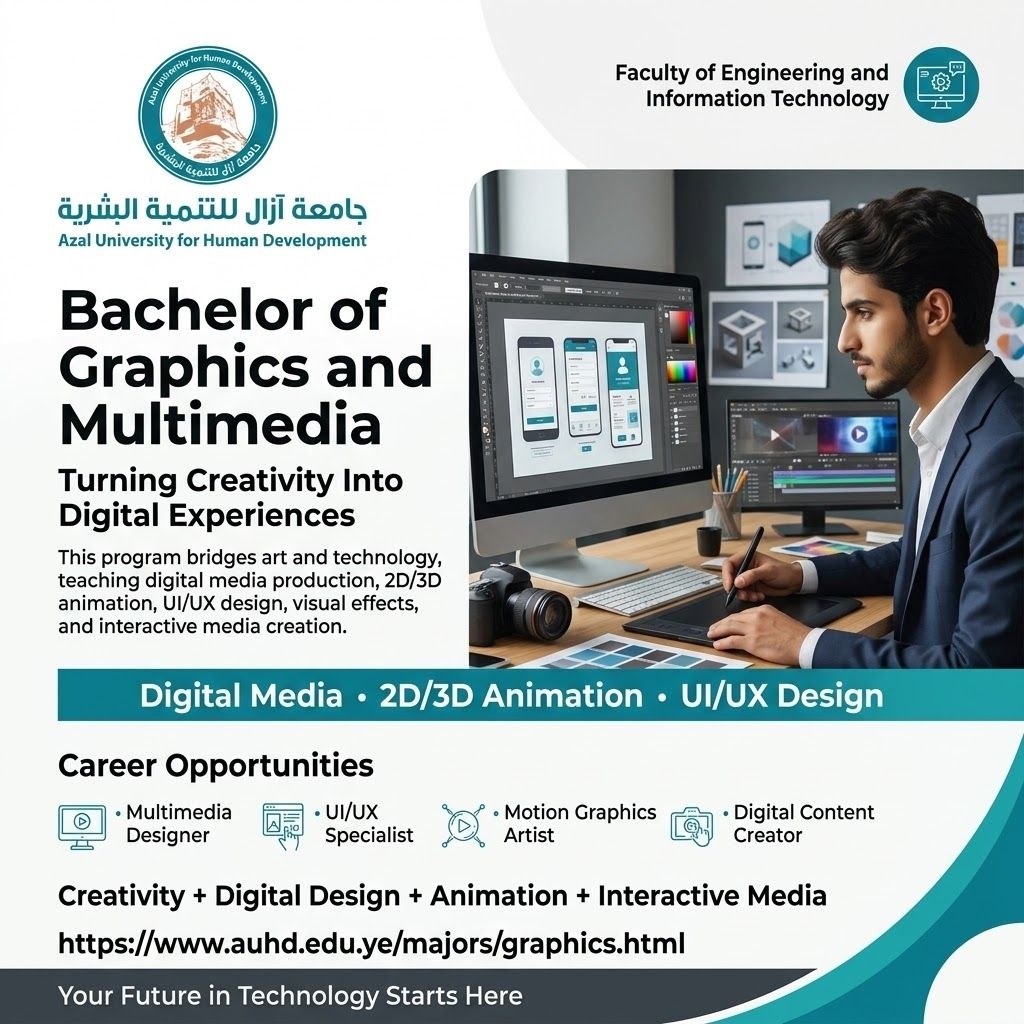
Explore Civil Engineering →A program integrating art and technology, with a focus on graphic design, digital media production, animation, and interactive design. It introduces principles of user interface and user experience design, visual effects, and contemporary creative production tools.
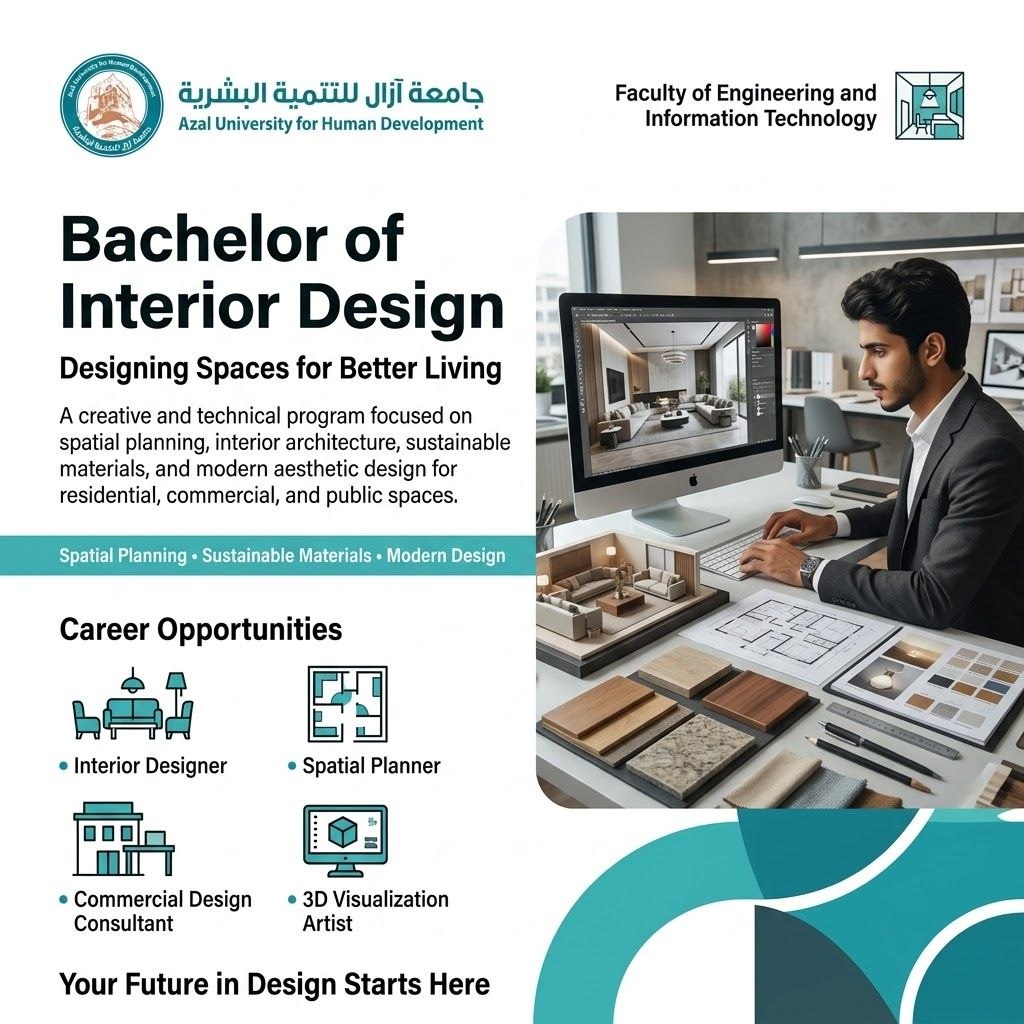
Explore Graphics and Multimedia →An academic program combining creative and technical aspects of interior space design. It addresses space planning, materials, colors, lighting, furniture, and the balance between function, aesthetics, and comfort, while introducing sustainable design principles for residential, commercial, and public spaces.
Explore Interior Design →Developing competencies in programming, systems management, data, networks, and digital technologies, with applications in organizational and professional settings.
Strengthening knowledge of information and digital systems protection, network design, communication technologies, and principles of technical safety and reliability.
Developing knowledge related to the design of buildings, structures, infrastructure, urban planning, and engineering sustainability.
Developing creative and technical capabilities in graphic design, multimedia, interior design, and visual communication.
Explore your program, review the study plan, and contact the admissions team to arrange your next steps.
Review the engineering, technology, and design programs and choose a specialization aligned with your interests, qualifications, and professional goals.
Confirm the required qualifications and documents, academic plan, study arrangements, and any program-specific requirements.
Consult official University announcements for application periods, tuition fees, and approved admission procedures.
Contact the University for official information and complete the application process in accordance with published instructions.
For inquiries about academic programs, current admission requirements, study plans, tuition fees, and registration periods, please contact Azal University for Human Development and specify your program of interest.
Explore the academic programs offered by the Faculty of Engineering and Information Technology and discover educational pathways that develop scientific knowledge and strengthen engineering, technical, and creative capabilities.
Explore Academic Programs Ask About AdmissionsFaculty of Engineering and Information Technology · Azal University for Human Development
Engineering and technology education that develops knowledge, practical skills, and a commitment to development.
Associate Professor · Dean of the Faculty of Engineering and Information Technology
In the name of Allah, the Most Gracious, the Most Merciful. Peace and blessings be upon Prophet Muhammad.
Welcome to the Faculty of Engineering and Information Technology, established in 2013 as part of Azal University for Human Development's expansion plan. The Faculty brings together Architectural Engineering, Civil Engineering, Information Technology, Cybersecurity, Graphics and Multimedia, Network and Communications Engineering, and Interior Design.
These disciplines play an important role in the development of institutions and communities. They enable students to build scientific knowledge and practical skills that respond to workforce needs and advances in engineering and technology.
We strive to provide a stimulating learning environment and attract capable academic staff, preparing graduates to apply their knowledge and skills and contribute to progress and development in Yemen.
I wish all students joining the Faculty's programs every success. May they become a source of pride and support for their families and their country, now and in the future.
Peace, mercy, and blessings of Allah be upon you.
Dr. Mukhtar Mohammed Gilan
Dean of the Faculty of Engineering and Information Technology
Faculty of Engineering and Information Technology · Azal University for Human Development
Explore program courses, study levels, and semester progression.
Open the published study plan for your program to review courses and their distribution across levels and semesters.
Faculty of Engineering and Information Technology · Azal University for Human Development
Plan your study week and follow lecture and practical session times.
Academic Year 2026–2027
View course times, lectures, practical sessions, teaching staff, classrooms, and laboratories in the Faculty's published timetable.
Open Timetable PDFThe Faculty follows a semester-based system, with courses prescribed for each level or track under approved study plans. Academic guidance supports understanding of requirements and progression while developing practical, research and professional competencies.