
 https://www.auhd.edu.ye/upimages/policies/2/Azal2026-10-04-10-10-54-12225.png
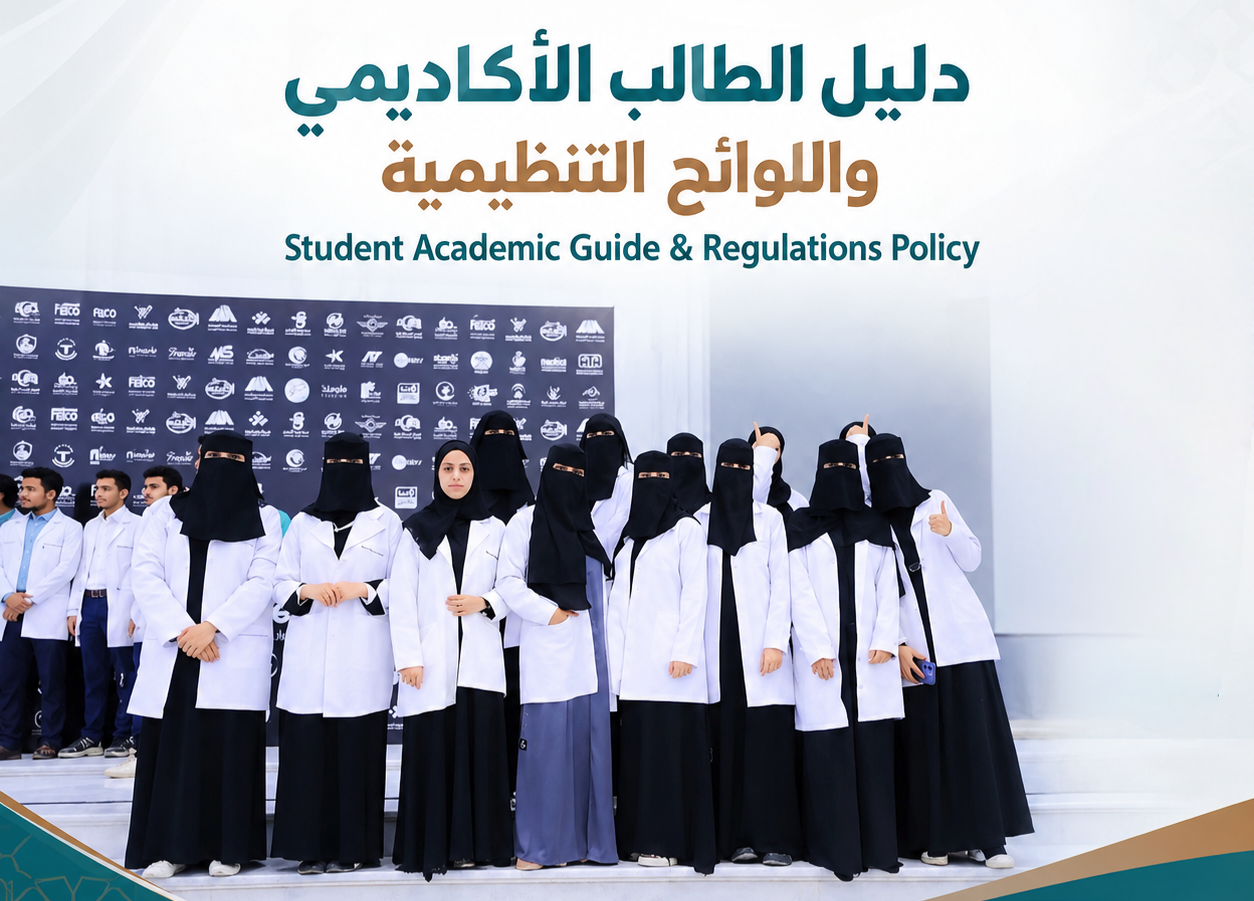
 Comprehensive Student Academic Guide & Regulations Policy
Azal University for Human Development (AUHD) is committed to delivering world-class higher education that bridges theoretical mastery with immediate practical readiness. This comprehensive academic guide outlines all rules, bylaws, curriculum structures, assessment methodologies, and progression standards governing undergraduate and postgraduate students across all university faculties, including Medical Sciences, Engineering & Information Technology, Administrative & Financial Sciences, and Special Education.
1. Preamble, Scope & Institutional Objectives
The primary objective of this guide is to ensure absolute transparency, equity, academic integrity, and strict adherence to national and international quality frameworks—such as the Saudi Commission for Health Specialties (SCFHS), the International Pharmaceutical Federation (FIP), the United Nations Academic Impact (UNAI), and International Accreditation Organization (IAO) standards. Every enrolled student is required to familiarize themselves with these regulations upon admission.
2. Admission, Registration & Study System
AUHD operates under the flexible credit-hour system across all academic semesters.
- Course Registration: Students must register for prescribed courses during designated university registration windows under the direct supervision of their academic advisors. Dropping and adding courses is permitted only within the first two weeks of the academic semester.
- Course Load: The normal study load per semester ranges between 12 and 18 credit hours, depending on the student's academic standing and cumulative GPA. Exceptional overloads require formal approval from the Academic Council.
- Attendance Policy: Regular attendance in lectures, laboratory sessions, and clinical rotations is mandatory. Students failing to meet the minimum attendance threshold (75%) without an officially approved medical or administrative excuse are barred from taking final examinations in those courses.
3. Degree Requirements, Curriculum Structure & Practical Training
Earning an undergraduate or postgraduate degree at AUHD is strictly contingent upon the successful fulfillment of structured credit hour thresholds, mandatory practical training, and rigorous capstone research projects:
- Credit Hour Thresholds: Students must complete prescribed curriculum credit hours specific to their major, distributed across university requirements, faculty core courses, and specialized electives.
- Practical Internships & Clinical Placements: Medical and healthcare cohorts complete supervised clinical training rotations in accredited hospitals and laboratories. Engineering and administrative students participate in structured industrial field training (such as Modern Pharma / Al-Aqel facilities).
- Graduation Capstone Projects: Seniors must defend a comprehensive graduation project or thesis demonstrating independent research capability, problem-solving acumen, and alignment with sustainable development goals.
4. Grading Criteria & Continuous Assessment Framework
Student performance is evaluated through a multi-component continuous assessment model designed to measure progressive comprehension rather than isolated examination success:
- Continuous Coursework (40% - 50%): Comprises midterm examinations, quizzes, laboratory performance, attendance participation, and assignment submissions.
- Practical & Clinical Evaluations (OSCE): Medical and health science students undergo Objective Structured Clinical Examinations (OSCE) in simulated clinical environments to assess acute trauma response, patient communication, and diagnostic precision.
- Comprehensive Final Examinations (50% - 60%): Cumulative assessments administered at the conclusion of each academic semester under standardized supervisory boards.
5. Examination Bylaws & Academic Integrity
AUHD enforces strict examination bylaws to safeguard absolute fairness, confidentiality, and institutional credibility:
- Examination Halls: Governed by independent supervisory committees. Unauthorized electronic devices, communication tools, and unapproved materials are strictly prohibited.
- Zero-Tolerance for Plagiarism and Misconduct: Plagiarism in research papers, cheating during examinations, or falsification of academic data triggers immediate disciplinary investigation by the Academic Council. Penalties range from grade nullification to permanent expulsion.
- Grade Review and Appeals: Students retain the right to submit a formal grade review request within designated windows following semester result announcements.
6. Academic Progression, Standing & Retention
Students must maintain satisfactory academic standing to progress through their respective degree tracks. A minimum Cumulative Grade Point Average (CGPA) of 2.0/4.0 is required for undergraduate programs, and 3.0/4.0 for postgraduate programs. Failure to maintain this threshold places the student on academic probation, triggering mandatory intervention through specialized units such as the Student Needs Tracking Unit and faculty mentorship programs, ensuring high retention and graduation rates.
Explore Related University Portals
Access our official academic portals, verification systems, and quality accreditation indices: